Some people have myopically suggested that right-wing violence extremism in the US are consequences of Donald Trump’s rhetoric. In truth, the former has been born of many cultural forces. Below I note some of these, along with some brief remarks.
White supremacist ideologies are a part of the US’s cultural heritage
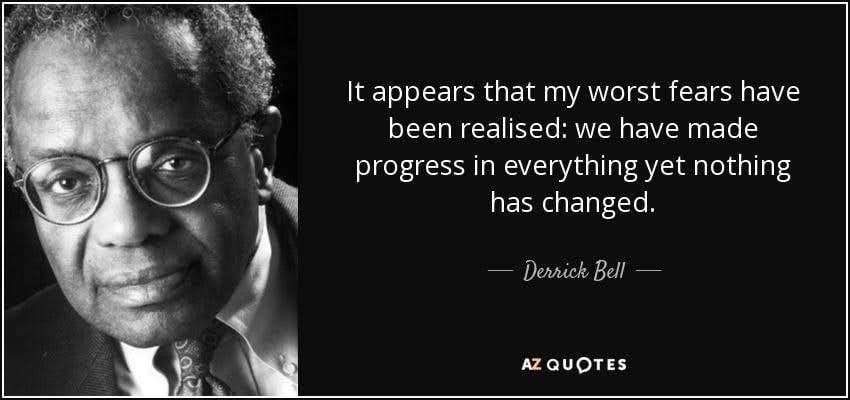
It is important to recall that the United States is a settler colony that established its territorial basis via warfare and the subjugation of Native American populations. It also established its economy via the exploitation of enslaved Africans. Both of these processes necessitated the formulation of cultural instruments wherein these processes could be achieved with maximum effect. Such instruments consisted of laws, economic institutions, technologies, and processes of socialization focused on both sustaining and optimizing oppression. What is most important here is that the inception of these processes—colonization and slavery—has only been counterbalanced by their maintenance by ongoing acts of violence and oppression. Hence, as John Henrik Clarke has told us, “History is a current event.”
The normalization of violence as a political instrument
While the above entails this, it is important to remember that political violence is not alien to the United States. Not only did this country fight a Civil War that resulted in close to a million deaths, but that state and private entities have also used violence against labor activism, civil rights activism, anti-war activism, police reform activism, and so on are testament to political violence’s recurring place in American public life. Hence, violence is an indelible part of the US’s social fabric. Acts of political violence are therefore not aberrant, but germane to the expression of power in the American political system. Do recall that the US is one of the most violent countries on Earth, so much so that it exports violence abroad in the forms war, military coups, and assassinations.
The dislocations of deindustrialization and globalization
The processes of economic transformation of the late 20th Century have produced profound contradictions in American life that have contributed towards the exacerbation of pre-existing challenges. Consider that the Civil Rights Movement sought to achieve the structural assimilation of African Americans and other racialized and oppressed groups within the dominant political economy of US society. In a context of economic expansion and prosperity, such demands might appear feasible. How do such demands appear in contexts of economic contraction or dislocation, as has been the case for much of the last fifty years? Hence, the processes of deindustrialization and globalization have not only destabilized the US’s working classes, but have also contributed greatly to a cultural malaise which pervades this society best described by Jacob H. Carruthers as “fundamental alienation”. The resulting dislocations have created or expanded interstices wherein a variety of ideologies—some atomistic, some reactionary, but all based on alienation to varying degrees—might thrive and flourish.
A willingness of politicians to capitalize upon these social tensions for short-term gains
The American political system, much like its economic system, is driven by the inescapable myopia of short-term thinking. Just as corporations act on the basis of achieving profits in the short-term. American politicians strive towards the goal of electoral victories, which also are short-term aspirations. Such actions necessarily wed them to the political currents of the day. Whether these currents are corrosive to the society is secondary to their utilitarian expediency. Hence, the courting of reactionary movements and ideologies is seen as a necessary end, which also serves to facilitate the increased normalization of extremist rhetoric in American political life.
It should be noted that this “extremist rhetoric” is not anathema to the political ethos of the US, as again, we are speaking of a settler-colony born of enslavement which has institutionalized the application of coercive control as a means of sustaining its social order. Thus, we are already dealing with an extreme reality, one however that in other moments, the rhetoric of politicians might seek to conceal rather than acknowledge or champion.
The pervasive alienation of American culture
Alienation in this milieu acts as a cultural foundation of violence and is expressed in many facets of American culture. The culture of mass-consumption, which promises eternal happiness if only we would spend, tune-in, or act to satiate the insatiable stream of artificial desires constantly foisted upon us is not the source of pervasive alienation in this country, but it is an expression of it. We live within a society that works laboriously to deny people’s consciousness of who they are and of the nature of reality. We are told by entertainers to be happy while climate change imperils our survival as a species, to watch the latest sporting event while African people’s lives continue to be destroyed by the US’s criminal justice system, to binge watch our favorite television shows while women and children are sexually assaulted and families destroyed in detention centers for undocumented immigrants, and to camp out for Black Friday sales while tens of millions lack health care, millions are unemployed, and hundreds of thousands are homeless.
Further, we are told that our idiosyncratic identities are the highest expressions of ourselves and thus should form the basis of personal and political existence. Yet we live in a society wherein systems of oppression cannot be critically analyzed or dismembered on such a conceptual basis. Malcolm X was clear that his personal identity as a Muslim, though spiritually meaningful, was not sufficient to inform either African people’s struggle for sovereignty or the destruction of imperialist/white supremacist systems. He acknowledge that his spirituality provided a social ethic for the transformation of the humanity of African people, but that it was not expressive of the totality of the political and economic transformation that African people or the world needed.
Herein, we confront the inevitable finitude or limitations of personal identity and the politicization of such identities in a world where systems of power have been forged on the basis of capitalism and white supremacy. In such a context, the fetishization of personal identities, the obsessive and incessant mining of signifiers of idiosyncratic novelty are too bases of alienation, as they cannot “cure what ails us,” which in this case are the bases of fundamental alienation.
In closing, though the current American president has been seen as the epicenter of America’s extremism of late, we would do well to remember that he has merely re-articulated and re-presented such tendencies. He has been an important signifier of our times and the more pervasive social unraveling characteristic of it. The cultural vectors of such disintegration will not dissipate with a change in the presidency, nor will the alienation that is at the heart of US society be undone by any actions of the electorate. These challenges, along with their specific manifestations born of capitalism and white supremacy, will not be satisfied by a retreat into ideologies that enshrine the idiosyncratic or the ever-fashionable politics of atomization which seek to divide African people against themselves on the flimsy bases of nationality, ethnicity, gender, or social class. A more expansive vision is needed accompanied by a set of commitments to the transformation of reality, but most importantly, one must apprehend as clearly as possible the present reality and its inescapable moorings to the past.